Chapter Twenty-Two: Inspired by Johann Sebastian Bach, Cantata No. 156 and the second movement of the Fifth Harpsichord Concerto.
When Suleimān and Miss Jessie arrived at the Curtis Institute of Music, Suleimān took his seat, arched Christoph’s bow to play Bach’s Arioso, and fixed his gaze on the source of his inspiration. Christoph then began to sing Suleimān’s Psalm.

Chapter Twenty-One: After hearing the mourners gathering next door following David Duquan’s funeral, Jerome Jefferson figured David Duquan was one lucky little fellow. Then Jerome thought of that badass who called himself “June Bug,” and a swell of sadness rose.
Dude never got to see his son smile, Jerome thought as Suleimān walked in, holding Christoph by the neck.
Jerome wept.
He was inconsolable and reached for his son’s hand, holding on until his eyes stopped screaming for forgiveness and his mouth began to tremble as he formed the words. Jerome told the boy he had never understood how incredible his talent was. He wondered if Suleimān would do something for him before he reaped the karma he had earned. He pleaded, “Please, play something, something jus’ for me.”
Suleimān pulled a chair close to his father’s bedside, cradled Christoph like a compassionate mantis, and set his bow to Franz Schubert’s Ave Maria. Jerome heard Christoph sing:

At David Duquane’s funeral, the Rands grabbed Grief by the throat and swallowed it; that was until Mr. Demmings joined Suleimān, who choked Christoph by the throat. They plucked their strings to play Antonín Dvořák’s Romantic Piece, and their rendition sounded like a lament that cried, “Where are you, David?” Before they finished the first measure, the mourners had turned it into a round, and every part of the church echoed with love and sorrow; every voice asked why David had to leave them and where he had gone.

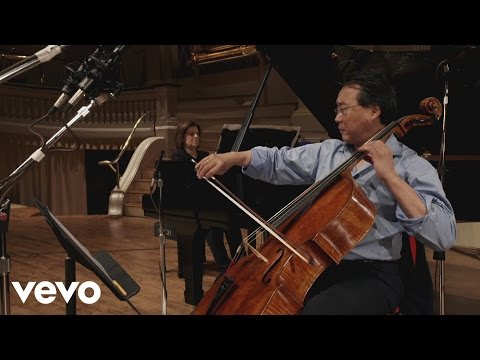
Méditation de Thaïs by Jules Massenet, Cello and Piano. Performed by Yo-Yo Ma with Kathryn Stott, Essential Yo-Yo Ma
Chapter Twenty: When Miss Floreen tells Keisha that the baby is dead, she hears Suleimān playing Méditation de Thaïs by Jules Massenet. The haunting resonance inspires Miss Floreen to sing what she knows best. She sings Remember This, and during Christoph’s emotional reprieve, Miss Floreen soothes Keisha, balancing her grief with a promise of peace. A moment of grace emerges, and Keisha feels it softening her from the inside out. She begins to feel what her mother has known but has never lived inside herself. Guided by her mother, Keisha embraces Christoph’s tune, and they sing:

When Keisha and Miss Floreen returned home, Miss Floreen had to break the news to Keisha that the baby was dead, and she heard Suleimān playing Max Bruch’s Kol Nidrei. As Miss Floreen listened to the sound seeping through the wall, it reached her heart, and words rose to meet the melody, capturing Kol Nidrei’s solemn syllabic proclamations and virtuoso vocal runs.

Miss Clara heard Christoph sing Die Träumerei and fashioned these words.

Chapter Eleven: Rāshid took a deep breath and recalled how Diahanna first caught Suleimān’s attention—when she smiled and said, “You play music beautifully.” That brief admiration blinded him to how Diahanna sweated over Dwayne, Keisha’s brother. By the time he heard Suleimān’s neighborhood serenade, Rāshid realized Suleimān had been hopelessly blind. As the Swan Song pierced Rāshid’s chest, the depths of his and Suleimān’s desperate desires grew even more haunting with Scriabin’s Romance for Voice and Piano, as Suleimān latched “pleading” onto Christoph’s bow. Rāshid heard these words:
Rāshid is infatuated with Suleimān and longs for connection; he was familiar with Suleimān’s melancholy.

Chapter Five presents Suleimān’s lament.

The sonata had no words, yet tonight’s performance felt poignant, almost confessional as Suleimān ponders over the impact his father has on his life and his music.