Suleimān’s Psalm
New Harmony and Beyond
A NOVEL
Book Two in the New Harmony Series
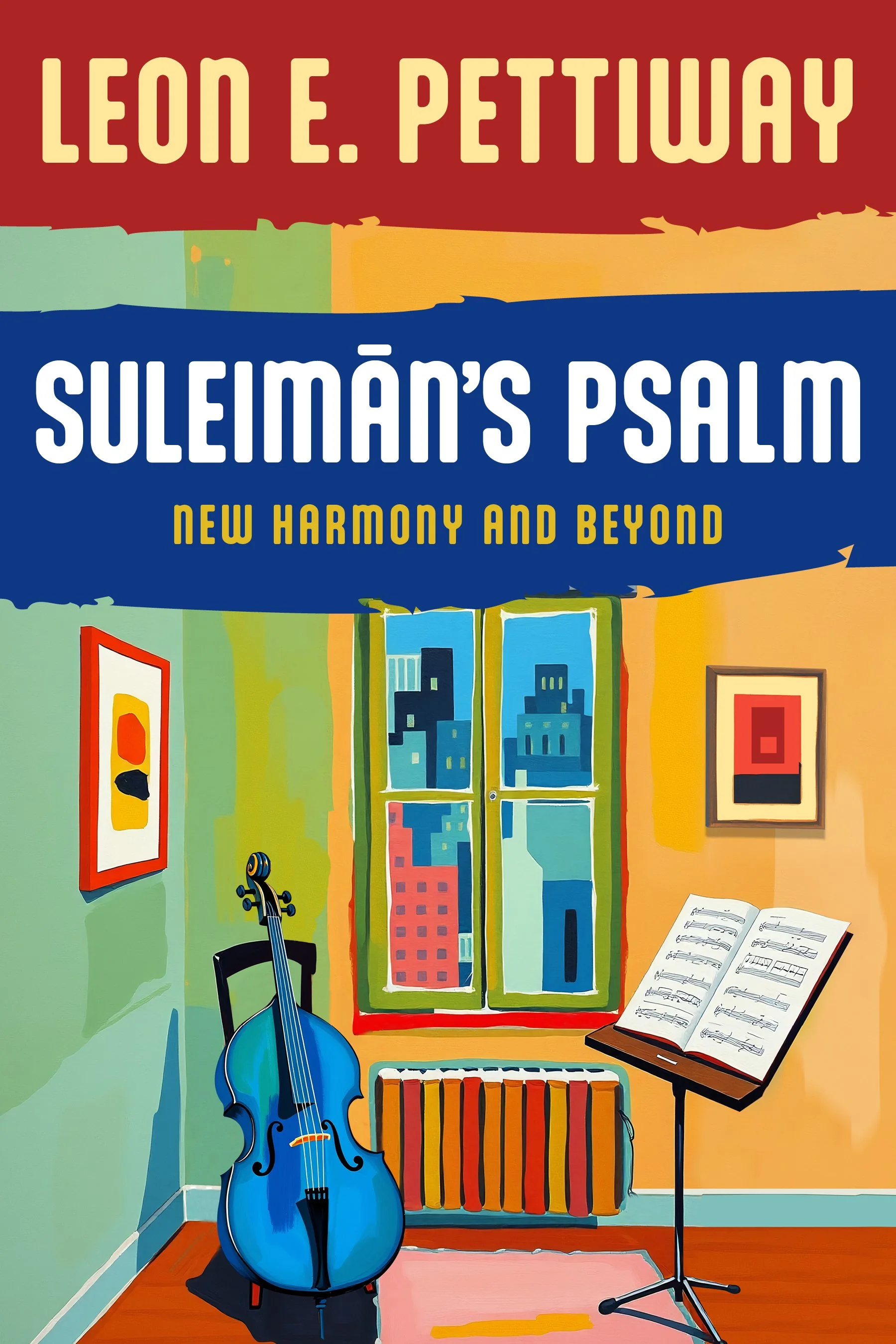
The unvoiced lyrics in Bach’s Arioso, played on the cello by Jonas Starker on the cello, were the seeds for Suleimān’s Psalm. As such, music frames the manuscript and the cello is an important character. Since music is the primary organizing principle, rhythms erupt in the rhyme, the slang, and the cadence that mark urban life in one of Philadelphia’s African-American communities.
The New Harmony Series explores the interplay of contradiction and nuance, flirting with what is real and what is imagined. As the second book in the series, Suleimān’s Psalm serves as the connective tissue linking Book One (New Harmony: A Mother’s Story of Love and Loss) and Book Three (The Awakening). The book’s primary thematic thrust centers on the dichotomous interplay of ignorance and wisdom, embedded in the contradictions that frame culture and ethics.
Unlike the first book in the series, the language in Suleimān’s Psalm is urban and raw, giving the manuscript a distinct beat and pacing. In large measure, the book’s musicality stems from classical cello music, which inspired some of the lyrics, poetic verse, and rhythms, but blues artists like James Earl Hooker also shaped the blues found in Chapter Sixteen. The influence of hip-hop and rap artists also sparked the creation of the lyrics and poetry for the “Middle Passage” as well as other elements of the book. Classical pieces like “Sur: Regreso Al Amor, Fugata” and “Milonga del Angel” inspired the street scene in Chapter Twenty, when June Bug ventures into the Hispanic section of North Philadelphia, while Bachianas Brasileiras No.5 (Äria) and tango music inspire the rhythms of the barrio.
While the primary theme is wisdom and how it reveals itself through the sights and sounds of everyday life, everything has a voice and is steeped in magic and mysticism. Ammeah, an anointed and Ascended Master, appears from the ether to protect and guide Miss Jessie, Miss Floreen, Miss Clara, and Miss Ida Mae, women who live on Greene Street. Flowers are not lifeless, voiceless, or without presence. Even tin cans tap and rattle in the wind. The rain has a rhythm and a voice; the weather, with its tumultuous winds, announces the approaching violence. Objects are never what they seem on the surface. Therefore, Suleimān’s Psalm depicts a magical world and engages all the senses.
A Glossary also accompanies Suleimān’s Psalm, providing definitions of the urban slang used in the rap and hip-hop beats throughout the manuscript. Readers are also encouraged to view the videos and listen to the music that enlivens Suleimān’s Psalm.
